
How Effective Is Teeth Whitening in Dubai Clinics?
- 3 days ago
- 5 min read
Coffee, tea, spices, and everyday life can gradually make teeth look darker than they once did. Patients often ask, "how effective is teeth whitening in Dubai clinics?" The short answer is that professional whitening can produce a clearly noticeable improvement for many people, especially when discoloration is caused by food, drinks, smoking, or natural aging. The best result, however, depends on the type of staining, the condition of your teeth and gums, and the treatment selected by your dentist.
Professional whitening is not about creating an unnatural, overly bright smile. A careful dental assessment helps set a realistic shade goal that looks fresh, healthy, and appropriate for your features. It also helps protect you from treating a problem that whitening alone cannot solve.
How Effective Is Teeth Whitening in Dubai Clinics?
Dentist-supervised teeth whitening is generally more effective than over-the-counter strips, toothpastes, or home remedies. In a clinical setting, the whitening agent is selected and applied with attention to your enamel, gum health, sensitivity history, and existing dental work. This allows for a stronger, more controlled treatment than products designed for general use.
Many patients see a visible change after an in-clinic session, while others may benefit from a customized home whitening plan or a combination of both. The result is often several shades lighter, but the exact change varies from person to person. A dentist should avoid promising the same shade for every patient because teeth respond differently.
Professional treatment is especially effective for external stains. These are stains that sit on or near the enamel surface, often linked to coffee, black tea, red wine, tobacco, colored foods, and inconsistent cleaning habits. A professional cleaning before whitening can make a meaningful difference when surface deposits are contributing to a dull appearance.
The type of discoloration matters
Not every dark tooth responds equally to whitening. Yellow-toned teeth commonly lighten well, while gray, blue-gray, or deeply brown discoloration may be more difficult to change. Internal staining caused by certain medications, dental trauma, aging of the tooth, or a previous root canal may need a different cosmetic approach.
Crowns, veneers, bridges, fillings, and dentures will not whiten with bleaching gel. This is one of the most important points to understand before treatment. If a visible crown was matched to your current tooth shade, whitening your natural teeth may make that restoration look darker by comparison. Your dentist can help you plan the correct order of treatment, which may include whitening first and replacing a visible restoration later if needed.
Why a Dental Assessment Makes Whitening Safer
Whitening products are designed for healthy teeth and gums. If you have untreated decay, gum inflammation, worn enamel, exposed roots, cracked teeth, or persistent tooth pain, these concerns should be addressed first. Applying whitening gel to an unhealthy tooth can increase discomfort and delay the care you actually need.
A dental examination also identifies whether the color change is related to plaque, tartar, cavities, or a tooth that has lost vitality. For example, one tooth that suddenly looks much darker than the teeth around it needs assessment rather than a cosmetic quick fix.
At a trusted dental clinic, the process should begin with a conversation about your health history, dental restorations, sensitivity, and desired result. DHA-licensed dentists can recommend an approach that fits your smile rather than using a one-size-fits-all whitening treatment.
In-Clinic Whitening vs. Take-Home Trays
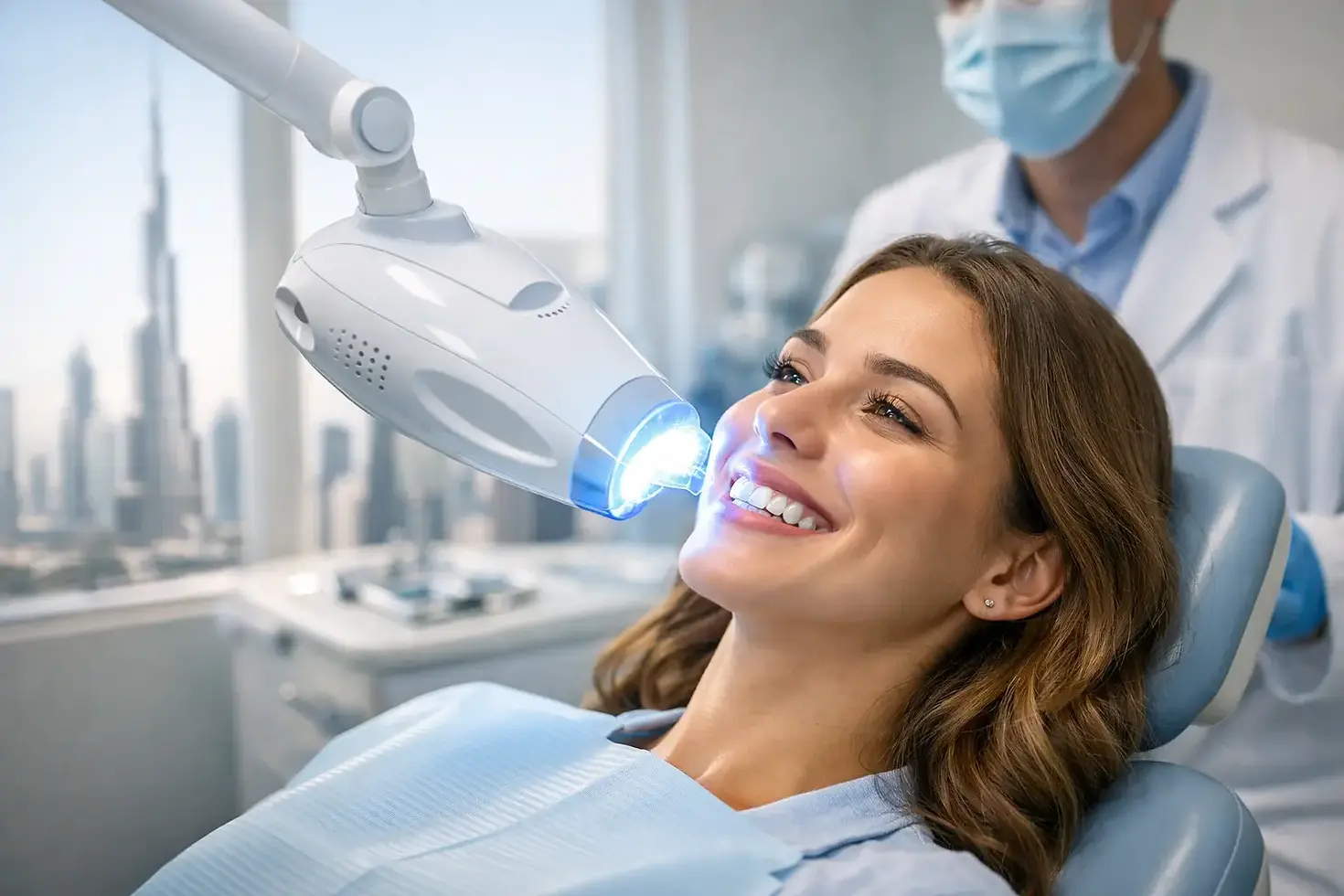
In-clinic whitening is a practical choice for patients who want faster, professionally monitored results. Your dentist protects the gums, applies the whitening material carefully, and checks your comfort during the appointment. It can be a convenient option before a wedding, professional event, holiday, or other special occasion, provided you schedule early enough to manage any temporary sensitivity.
Custom take-home trays offer a different advantage. The trays are made to fit your teeth closely, helping the whitening gel stay where it should and reducing contact with the gums. The results develop more gradually, and some patients prefer the flexibility of whitening at home under their dentist's instructions.
Neither option is automatically better for everyone. In-clinic treatment may suit a busy professional seeking a faster change, while take-home trays may be better for someone who wants to lighten their teeth gradually or has a history of sensitivity. In some cases, a dentist may recommend a short in-clinic treatment followed by home trays to refine and maintain the result.
What Results Can You Realistically Expect?
A brighter smile can look cleaner, more youthful, and more polished, but whitening has limits. It changes the shade of natural tooth structure. It does not reshape teeth, close gaps, remove cracks, straighten crowding, or correct restorations that no longer match. If those concerns are part of your goal, your dentist may discuss options such as bonding, veneers, crowns, braces, or clear aligners.
Your starting shade matters. Someone with moderate staining may see a dramatic improvement, while someone whose teeth are already naturally light may experience a more subtle change. Lighting also affects how bright teeth appear, which is why before-and-after shade comparisons should be done carefully in a clinical setting.
Sensitivity is the most common short-term side effect. Some people feel brief tingling or a cold sensation after treatment, particularly if they already have sensitive teeth. This is usually manageable and temporary, but you should tell your dentist immediately if discomfort is significant or persistent. Adjusting the strength, wear time, or treatment schedule can often make whitening more comfortable.
How Long Does Professional Whitening Last?
Whitening results do not last forever, but good habits can help preserve them. Many patients enjoy their brighter shade for months, and some maintain it longer with occasional dentist-guided touch-ups. How quickly the color returns depends largely on diet, smoking, oral hygiene, and the natural characteristics of your enamel.
Coffee and tea do not have to disappear from your routine. Rinsing with water after dark beverages, drinking water throughout the day, brushing as advised by your dentist, and attending regular cleanings can help reduce new staining. Smoking and tobacco use are among the quickest ways to re-stain teeth and can also affect gum health.
Avoid repeated whitening without guidance simply because you want to keep chasing a brighter shade. Overuse can lead to unnecessary sensitivity and may not deliver a better-looking result. A maintenance plan based on your actual needs is safer and more cost-conscious.
When Whitening May Not Be the Right First Step
Whitening may need to wait if you are dealing with active cavities, gum disease, severe sensitivity, or urgent dental pain. It may also be postponed during certain stages of pregnancy or breastfeeding, depending on your dentist's advice and individual circumstances. A professional consultation provides the clearest answer.
Patients with extensive visible restorations should also discuss their options before beginning. It can be more affordable and predictable to plan whitening around future crowns or veneers than to whiten first without considering how the final smile will match.
For families and working adults in Karama, choosing a clinic that provides cleaning, restorative care, and cosmetic options in one place can make this planning easier. Net Dental Clinic can assess the health of your smile before recommending whitening, so cosmetic treatment supports your long-term dental care rather than working against it.
A brighter smile should feel like a confident improvement, not a risky experiment. Start with a professional assessment, be open about your goals and sensitivity concerns, and let your dentist recommend a whitening plan that protects the healthy smile you already have.


Comments