
Root Canal or Extraction: Which Saves Your Smile?
A severe toothache can make every decision feel urgent. When a dentist explains that the tooth has deep decay, infection, or damage, the question often becomes: root canal or extraction? Both treatments can stop pain and protect your overall health, but they achieve that goal in very different ways.
The best choice is not always the fastest or least expensive option on the day of treatment. It depends on whether the tooth can be predictably saved, the condition of the surrounding bone and gums, your budget, and what will best support your bite for years to come. A careful examination and dental X-rays give your dentist the information needed to recommend the safest path.
Root Canal or Extraction: The Core Difference
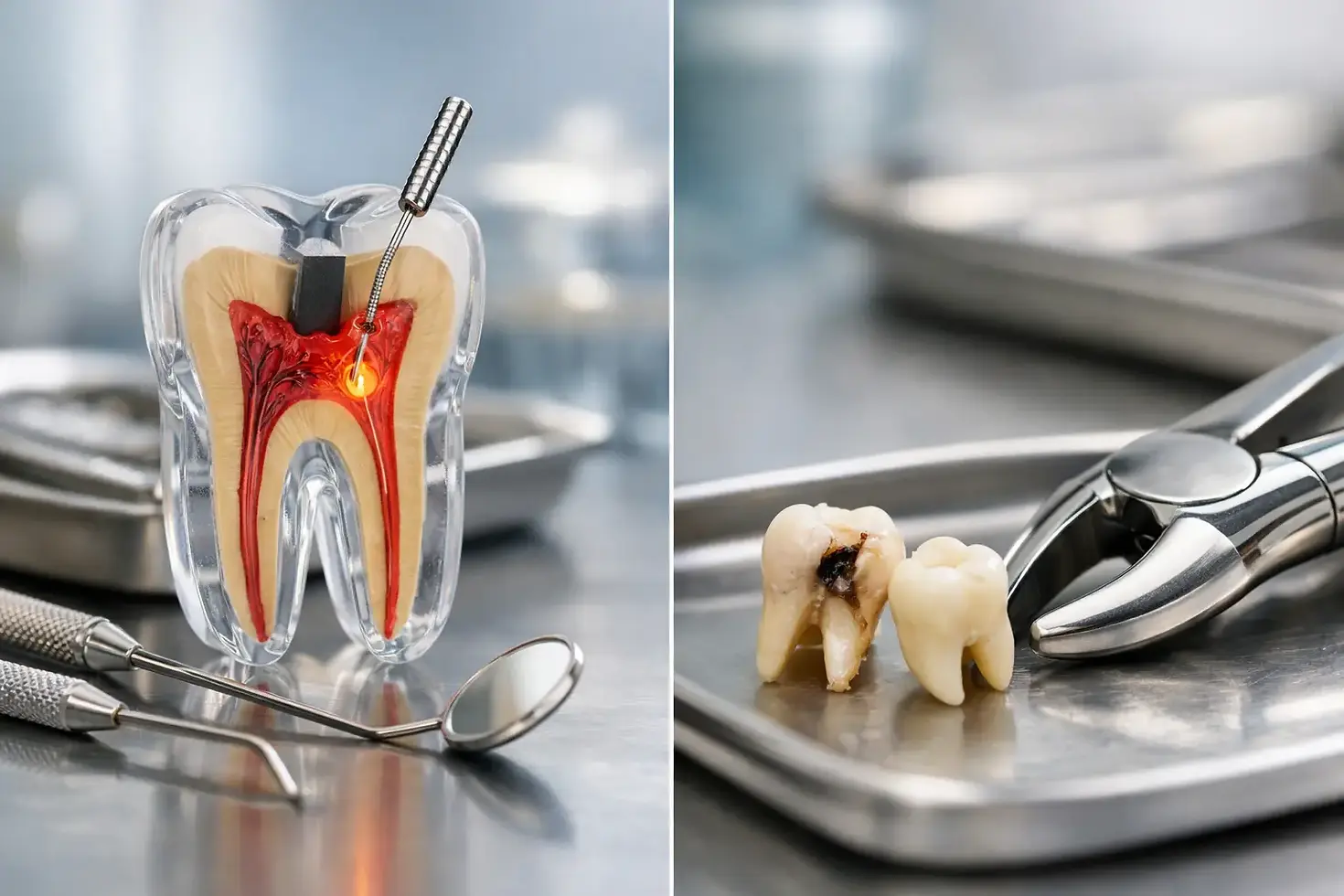
A root canal treatment is designed to save a natural tooth. Inside each tooth is soft tissue called pulp, which contains nerves and blood vessels. If bacteria reach this tissue through deep decay, a crack, trauma, or a leaking old filling, the pulp may become inflamed or infected. During a root canal, the dentist removes the infected tissue, cleans and disinfects the inner canals, and seals the tooth to prevent further infection.
After treatment, a crown is often recommended for back teeth or teeth with substantial damage. The crown reinforces the remaining structure so the tooth can handle normal chewing forces.
An extraction removes the tooth completely. This may be the right recommendation when the tooth is too broken down to restore, has a severe crack below the gumline, has advanced gum disease, or does not have enough healthy bone support. Extraction can also be necessary when an infection cannot be successfully treated or has returned after prior treatment.
Neither option should be viewed as a failure. The goal is to remove infection, relieve discomfort, and create a stable plan for your oral health.
When Saving the Natural Tooth Is Usually Preferred
When a tooth has a reasonable long-term prognosis, preserving it is usually the first choice. Your natural tooth helps you chew efficiently, keeps neighboring teeth in position, and supports the bone in your jaw. It also avoids the need to replace a missing tooth immediately.
A root canal may be suitable when the tooth roots are healthy, the crack does not extend too far below the gumline, and enough strong tooth structure remains for a filling or crown. Even a tooth with a very painful infection can often be saved if the foundation is sound.
Many people worry that root canal treatment will be painful. In reality, modern local anesthesia and dental techniques are designed to keep you comfortable. For most patients, the discomfort from an untreated infection is far worse than the procedure itself. Mild tenderness for a few days afterward is common, especially if the tooth was infected before treatment, but this generally improves as the area heals.
Saving a tooth also tends to simplify your future care. You may need a crown, but you are not managing a gap or planning a replacement procedure. With good brushing, flossing, routine checkups, and a well-fitting restoration, a root canal-treated tooth can function for many years.
When Extraction May Be the Healthier Choice
There are situations where trying to save a tooth would not provide a reliable result. If decay extends deeply below the gumline, the root is fractured vertically, or gum disease has caused major bone loss, a root canal may not solve the underlying problem. Repeated treatment on a tooth with a poor outlook can lead to more discomfort, appointments, and expense without delivering a durable outcome.
Extraction is also sometimes the better option for a severely damaged wisdom tooth or a tooth that cannot be restored with a crown. Your dentist should explain why the tooth cannot be predictably saved and discuss what happens after it is removed.
The important question is not simply whether extraction is less expensive today. It is whether leaving a space will affect your bite, chewing, appearance, or the position of nearby teeth. Some extracted teeth, particularly wisdom teeth, may not need replacement. However, losing a visible tooth or a tooth used heavily for chewing often calls for a replacement plan.
Replacement options may include a dental implant, a bridge, or a removable partial denture. Each option has different costs, treatment timelines, and maintenance needs. An implant can provide excellent stability, but it requires sufficient bone and a healing period. A bridge can restore the gap without surgery, though it may involve preparing the teeth beside the space.
Comparing Pain, Recovery, and Appointments
Both treatments are performed with local anesthesia, so you should not feel sharp pain during the procedure. Anxiety is understandable, especially when you are already in discomfort. Let your dental team know if you are nervous, have had a difficult dental experience, or need clear explanations at each stage.
Root canal treatment may be completed in one or more visits depending on the tooth, the number of canals, and the level of infection. The tooth may feel tender when biting for several days. Until the final crown or restoration is placed, avoid chewing hard foods on that side, particularly if the tooth is weakened.
Extraction recovery is different because the body must heal the socket where the tooth was removed. Tenderness, swelling, and minor bleeding can occur during the first few days. Following aftercare instructions matters: protect the blood clot, avoid smoking, do not use straws, and eat softer foods as advised. Disturbing the clot can cause dry socket, a painful complication that requires prompt dental care.
A straightforward extraction can feel like a quicker solution, but recovery is only one part of the picture. If the missing tooth needs to be replaced, the overall treatment timeline may be longer than saving the tooth.
Cost: Look Beyond the First Appointment
Cost matters, and patients deserve clear information before treatment begins. An extraction often has a lower upfront fee than a root canal and crown. But if you later need an implant, bridge, or denture, the total cost of replacing the tooth can be significantly higher.
A root canal involves treating the infection and restoring the tooth, so the initial investment is commonly higher. Yet when the tooth has a good prognosis, it may be the more cost-effective choice over time because it preserves your natural bite and avoids replacement treatment.
Insurance coverage, the type of tooth, the complexity of the infection, and whether a crown is needed all affect the final cost. Ask for a written treatment plan that explains the recommended procedure, restoration needs, expected fees, and available insurance options. At a community-focused practice such as Net Dental Clinic in Karama, transparent discussion helps patients make decisions without unnecessary surprises.
Do Not Delay an Infected Tooth
An infected tooth will not heal on its own. Pain may temporarily fade if the nerve tissue dies, but the bacteria can remain inside the tooth and spread into surrounding bone and tissue. Delaying care can turn a treatable problem into a dental emergency.
Seek prompt dental attention if you have persistent tooth pain, facial swelling, sensitivity that lingers after hot or cold foods, a pimple-like bump on the gums, fever, or a bad taste near one tooth. Significant facial swelling, difficulty swallowing, or trouble breathing needs urgent medical evaluation.
Questions Worth Asking Your Dentist
Before deciding, ask whether the tooth has enough healthy structure to support a crown, what its expected long-term prognosis is, and whether extraction would require replacement. It is also reasonable to ask about the number of visits, recovery expectations, total treatment costs, and alternatives if the first recommendation does not fit your needs.
A trustworthy dentist will not pressure you toward one procedure without explaining the clinical reason. Dental care should feel clear, not confusing, especially when pain is involved.
The right treatment is the one that safely removes infection and gives you the strongest practical outcome for your smile. If you are dealing with tooth pain or swelling, scheduling an examination promptly can protect more than one tooth - it can give you the time and clarity to choose care with confidence.


Comments