
Dental Bridge vs Implant: Which Option Fits?
A missing tooth can make everyday moments unexpectedly difficult. You may chew on one side, avoid smiling in photos, or notice neighboring teeth beginning to shift. When comparing a dental bridge vs implant, the right choice is not simply the one that costs less today. It is the option that best protects your oral health, fits your timeline, and feels manageable for your lifestyle.
Both treatments restore the look and function of a missing tooth. However, they work in very different ways. A personalized dental exam, including digital imaging when needed, helps determine which approach is safest and most practical for your smile.
Dental Bridge vs Implant: The Main Difference
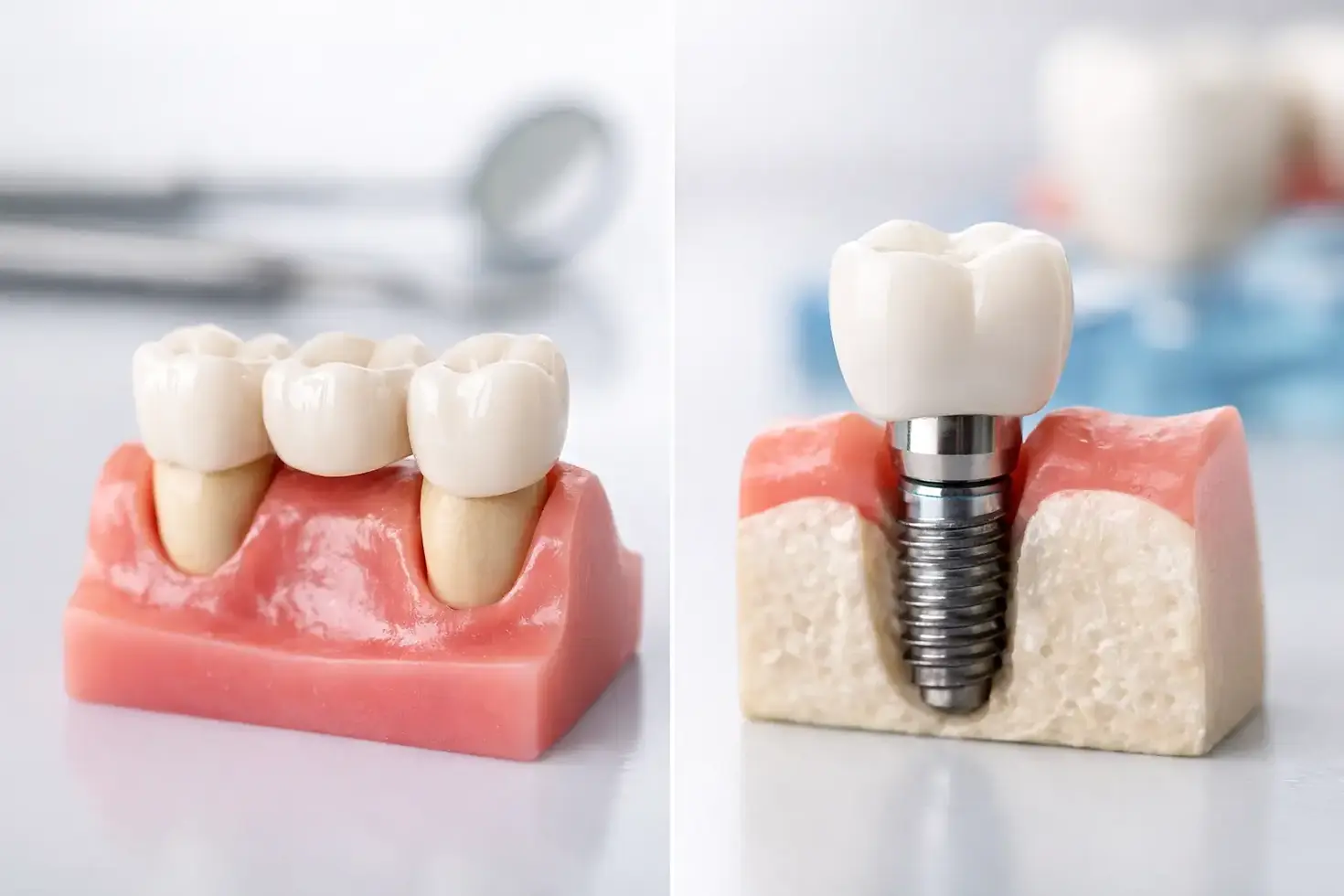
A dental bridge replaces a missing tooth by attaching an artificial tooth, called a pontic, to crowns on the teeth beside the gap. The neighboring teeth support the replacement tooth, creating a fixed restoration that is cemented in place.
A dental implant replaces both the visible tooth and its root. A small titanium post is placed in the jawbone, where it gradually integrates with the bone. Once healing is complete, the dentist attaches an abutment and a custom crown. The final result is a replacement tooth that stands independently rather than relying on adjacent teeth.
The core difference is support. A bridge is supported by nearby teeth. An implant is supported by your jawbone.
When a Dental Bridge May Be the Better Choice
A bridge is often an excellent option when you need to replace one or more missing teeth without a surgical procedure. It can be especially practical if the teeth on either side of the gap already have large fillings, wear, cracks, or existing crowns. In that situation, placing crowns on those teeth may be part of their needed restoration anyway.
Treatment is usually faster than implant treatment. After the supporting teeth are prepared, impressions or digital scans are taken for the bridge. You may receive a temporary restoration while the final bridge is made, then return for placement. This can suit patients preparing for an important event or those who prefer a shorter treatment timeline.
A bridge also has a lower upfront cost in many cases. For value-conscious patients, that can make treatment more accessible. However, it is worth looking beyond the initial fee. Bridges may need replacement after years of use, particularly if decay develops around the supporting crowns or if the bridge experiences heavy bite pressure.
The main trade-off is that a traditional bridge requires reshaping healthy tooth structure on the neighboring teeth. It also does not replace the missing tooth root. Without root-like stimulation from an implant, the jawbone beneath the missing tooth can gradually shrink over time.
When a Dental Implant May Be the Better Choice
An implant is often preferred when the adjacent teeth are healthy and you want to preserve them. Because the implant supports its own crown, there is no need to file down neighboring teeth for bridge crowns.
Implants also help maintain jawbone volume. When a natural tooth root is lost, the bone in that area no longer receives normal chewing pressure. An implant transfers biting forces into the jawbone, helping reduce the bone loss that commonly follows tooth loss. This can be particularly valuable in visible areas of the smile, where changes in bone and gum shape may affect appearance.
With good home care and regular dental checkups, an implant can be a long-term solution. The crown on top may eventually need maintenance or replacement, but the implant post itself can remain stable for many years.
The trade-off is time. Implant treatment commonly involves a healing period after placement, although the exact timeline depends on your bone quality, the tooth location, and whether an extraction or bone graft is needed. Some patients can receive a temporary tooth during healing, so they do not have to live with a visible gap.
Implants also involve surgery. For most suitable candidates, this is a planned and routine procedure performed with local anesthesia. Still, patients with certain medical conditions, uncontrolled gum disease, significant bone loss, or heavy smoking habits may need additional care before implant placement is advisable.
Cost, Durability, and Daily Care
Cost matters, but it should be compared fairly. A bridge may cost less at the beginning because it generally requires fewer appointments and no surgical placement. An implant can involve more stages, imaging, the implant post, surgical care, and a final crown. If bone grafting or other preparatory treatment is needed, that can affect the total cost further.
Insurance coverage can also differ by plan. Some plans may provide partial benefits for a bridge while offering limited implant coverage, even when an implant is the stronger long-term choice. Ask for a written treatment plan that clearly explains the recommended treatment, the steps involved, and expected costs. This makes it easier to check insurance eligibility and plan your care without surprises.
In daily life, both options require consistent oral hygiene. You brush a bridge and implant crown like natural teeth, but cleaning between and beneath the restoration is equally important. A bridge needs special floss or an interdental brush to clean under the artificial tooth and around the crowned teeth. An implant needs careful cleaning at the gumline to prevent inflammation around the implant.
Durability depends on more than the material. Bite force, teeth grinding, gum health, diet, oral hygiene, and dental visits all influence how long a restoration lasts. If you clench or grind your teeth, a custom night guard may protect both bridges and implants from excessive pressure.
Factors Your Dentist Will Evaluate
The best choice begins with a close look at your entire mouth, not just the gap. Your dentist will evaluate the health of the neighboring teeth, gum condition, jawbone volume, bite alignment, and the location of the missing tooth.
For example, an implant may be highly beneficial in the front of the mouth because it can preserve adjacent teeth and support a natural-looking gumline. In another case, a bridge may be more sensible when the neighboring back teeth already require crowns. If several teeth are missing in a row, an implant-supported bridge may offer a stable alternative to a traditional bridge that places too much pressure on natural teeth.
Your health history matters as well. Diabetes that is well managed does not automatically rule out implants, but healing should be assessed carefully. Smoking can raise the risk of complications and may affect treatment recommendations. Patients with active gum disease should address that condition first, because healthy gums are essential for the success of either restoration.
Questions to Ask Before You Decide
Before choosing between a bridge and an implant, ask how each option will affect your surrounding teeth and jawbone over time. Ask about the estimated treatment timeline, the need for temporary teeth, expected maintenance, and what happens if a restoration needs repair later.
It is also reasonable to ask whether your dentist recommends one option because it is clinically stronger for your situation or because it better matches your budget and timing. A trustworthy treatment discussion should include both factors. There is no one-size-fits-all answer, and you should understand the benefits and limitations before proceeding.
Frequently Asked Questions
Is a dental implant painful?
Implant placement is performed with local anesthesia, so you should not feel pain during the procedure. Mild soreness, swelling, or tenderness afterward is common and is usually manageable with the aftercare instructions provided by your dentist.
Can a bridge look natural?
Yes. A well-designed bridge can be matched to the color, shape, and size of your surrounding teeth. Modern materials allow dentists to create restorations that look natural while restoring chewing ability.
Can I get an implant immediately after an extraction?
Sometimes. Immediate implant placement may be possible when the extraction site, bone, and gums are healthy enough. In other cases, allowing the area to heal first provides a more predictable result.
Which lasts longer, a bridge or an implant?
An implant can often last longer because it does not depend on neighboring teeth and helps maintain bone. A bridge can also provide many years of reliable function when it is well made and properly cared for. Your oral health and bite habits are major factors for both.
A missing tooth is easier to address before nearby teeth shift, your bite changes, or bone loss progresses. At Net Dental Clinic, an experienced DHA-licensed dentist can assess your smile, explain the practical options clearly, and help you choose treatment that feels right for your health, comfort, and budget.


Comments